Robert Mckellar Aviation

NOTE: To use the advanced features of this site you need javascript turned on.

Home arrow Training/Costs
Training/Costs PDF Print E-mail
Saturday, 16 February 2008

HULL AERO CLUB

Where can I fly once I have my licence?
What can I do when I am a flying ace?
An introduction to microlight flying
Definition of a microlight
How do I get started? What's on offer at Rob Mckellar Aviation?
Are there any restrictions?
What will it all cost?

Hull Aero Club operates from Beverley Airifeld (Linley Hill), The airfield itself is a licensed airfield with excellent club house facilities. You can enjoy a friendly chat over a cup of coffee or tea, light bites are also available. In short, we offer good hospitality in comfortable surroundings rather than the usual cold portakabin or draughty old caravan of many other flying clubs and schools.

Hull Aero Club has an active social club and many events are organised throughout the year. Members and their guests are welcome at all times. Many of our members call in for a coffee even when they are not flying, and always receive a warm welcome.

WHERE CAN I FLY ONCE I HAVE MY LICENCE?
Microlights do not require conventional airfields. They can operate quite legally from grass strips or basically prepared fields with the land owner's permission. 'RM Aviation' can still help with advanced courses which include Navigation, Advanced Flying Techniques, dirt and short strip flying. Or just enjoy the social flying from Hull Aero Club.

WHAT CAN I DO WHEN I AM A FLYING ACE?
Visiting other airfields/microlight clubs/schools etc is all part of your new found freedom as a qualified pilot. There are regular 'fly-ins' all over the country. How far you travel is really down to you. As a club member of Hull Aero Club, you will be encouraged to spread your wings and join other club members on various 'Fly outs'.
Also RM Aviation will be running an annual Flying trip to the large European Microlight show at 'Blois' in France each September. This trip is an escorted flight of several aircraft, for Pilots looking to extend they're flying horizons. (Rob Mckellar has flown the channel 14 times without incident from any of the escorted aircraft to date.) All the hassle of organisation is looked after by RM Aviation you just come along and enjoy another new experience.


AN INTRODUCTION TO MICROLIGHT FLYING
Microlight aircraft can trace their origins back to the late 1970's when hang glider pilots took the seemingly logical step of fitting small engines to their craft. Taking aviation into uncharted areas meant that knowledge and skill could only be learned "hands on" in the air. This meant that powered hang glider flying was certainly exciting - and sometimes downright dangerous! No design controls or licensing regulations whatsoever meant that the most unlikely craft became airborne. With the pioneering days now over, today's
microlight aircraft are faster, safer, more comfortable and certainly easier to fly than ever before.

top

Costs range from as little as £2500 for a 'first generation' used aircraft to over £40,000 for a new fast, sophisticated model. They can be flown from any suitable large open field, with of course the owners permission and within any existing planning constraints, or from one of the many club sites or general aviation airfields. With CAA Aircraft Permits, Instructor Ratings and a well-established pilot licensing system, microlighting has now come of age yet it still remains one of the most fun and exhilarating ways to fly.

MICROLIGHT AVIATION ACHIEVEMENTS
Although they have been used for crop spraying, photography and by the armed forces, microlights are principally designed for pleasure flying. Being relatively inexpensive to purchase they have allowed people from all walks of life to operate their own aircraft at a much lower cost than may be associated with normal aeroplanes. Microlights have flown around the world and climbed to over 25,000 feet. Even back in 1984, microlights flew for over 12 hours to claim the world non-stop two seater duration and distance record of 550 miles! Today's high-performance microlights fly regular cross-country flights of over 200 miles in less than 2 hours on 25 litres of unleaded petrol.

DEFINITION OF A MICROLIGHT

A microlight is defined In the UK Air Navigation Order as follows:
It can carry a maximum of two people and the takeoff weight must not exceed 450 Kg.
It has either; a wing loading not exceeding 25Kg/sq.m, or a stalling speed not more than 41 mph.
It has an unrestricted fuel capacity - within the constraints of its maximum weight and balance limits.
There are two categories of microlight aircraft:

Image

1. Flex-Wing -Weightshift Controlled Microlights
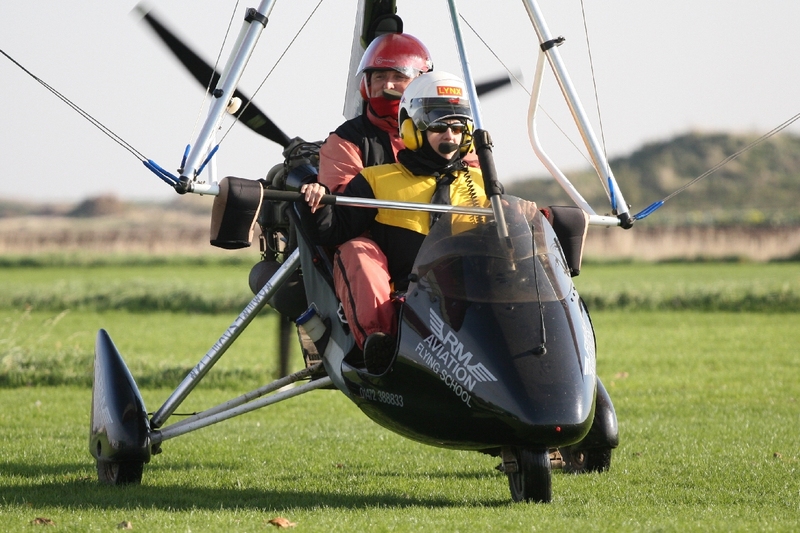
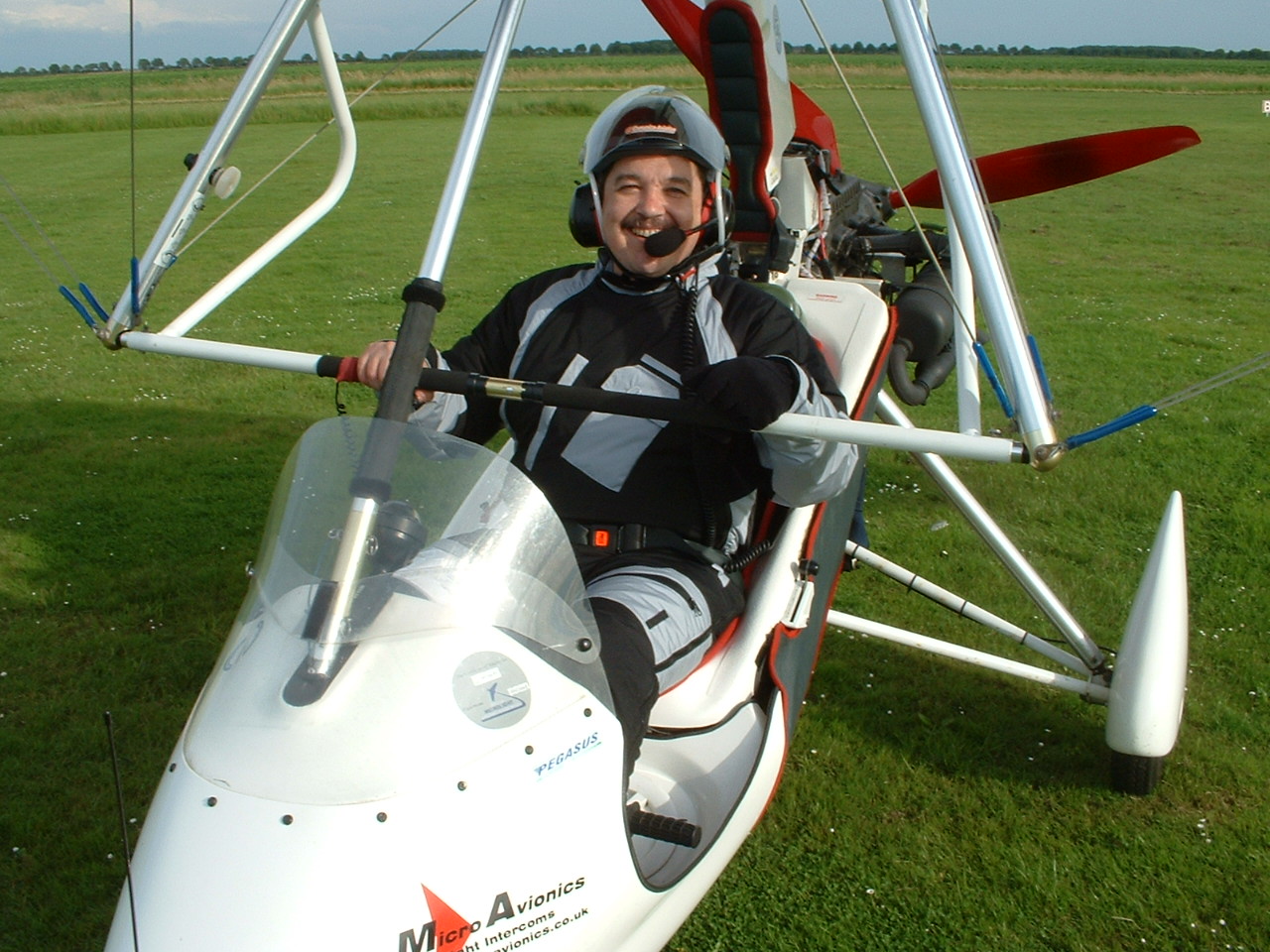
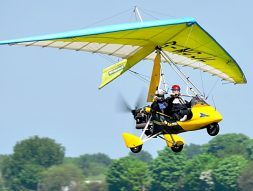
With a wing structure based on the hang glider design they have a tricycle undercarriage with seats, engine and propeller suspended below the wing. There is a braced triangular control bar that the pilot uses to pivot the wing around the 'hang point' assembly thereby achieving control in roll and pitch.

Image

2. Fixed Wing - Three Axis Controlled Microlights
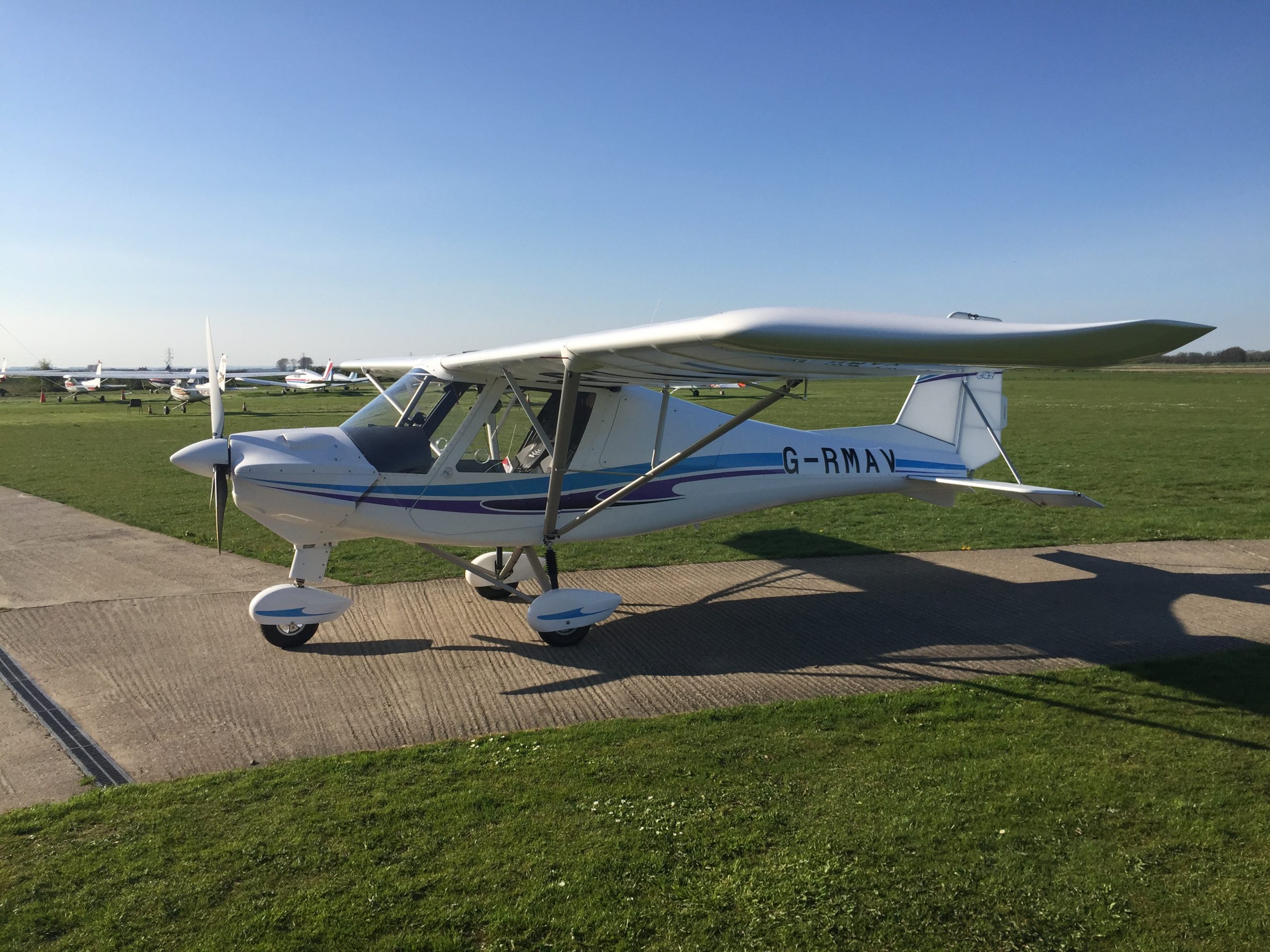
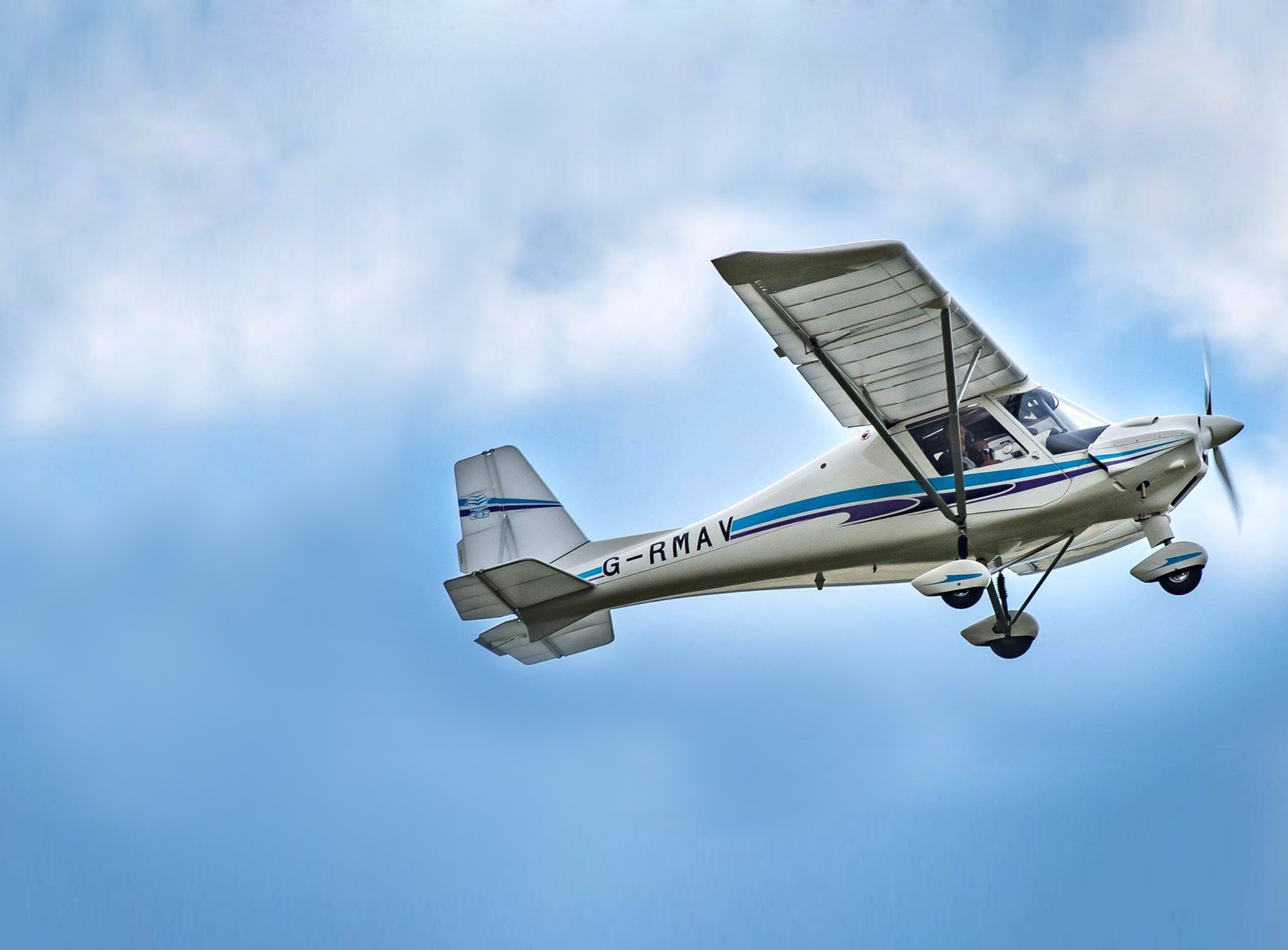
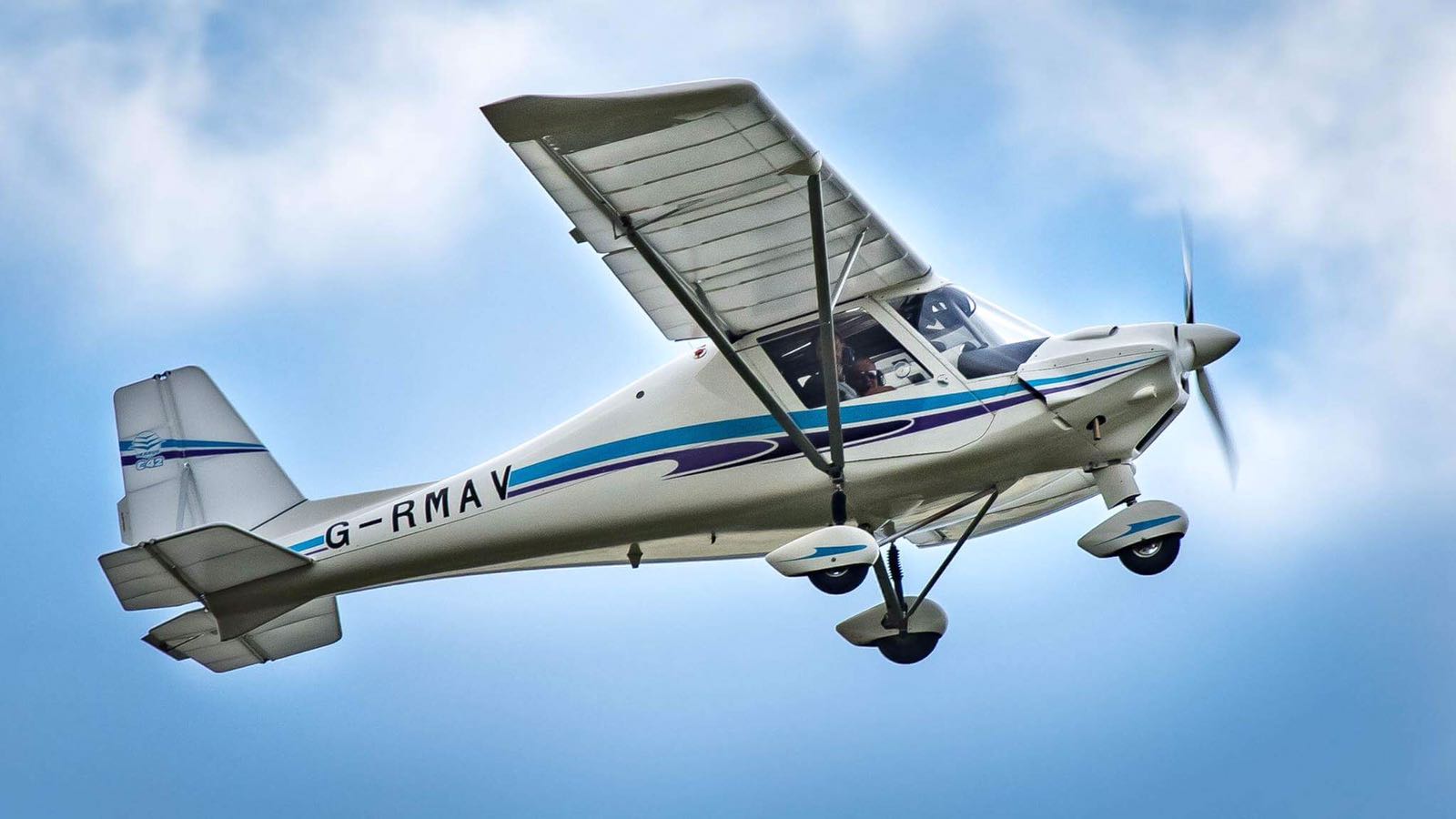
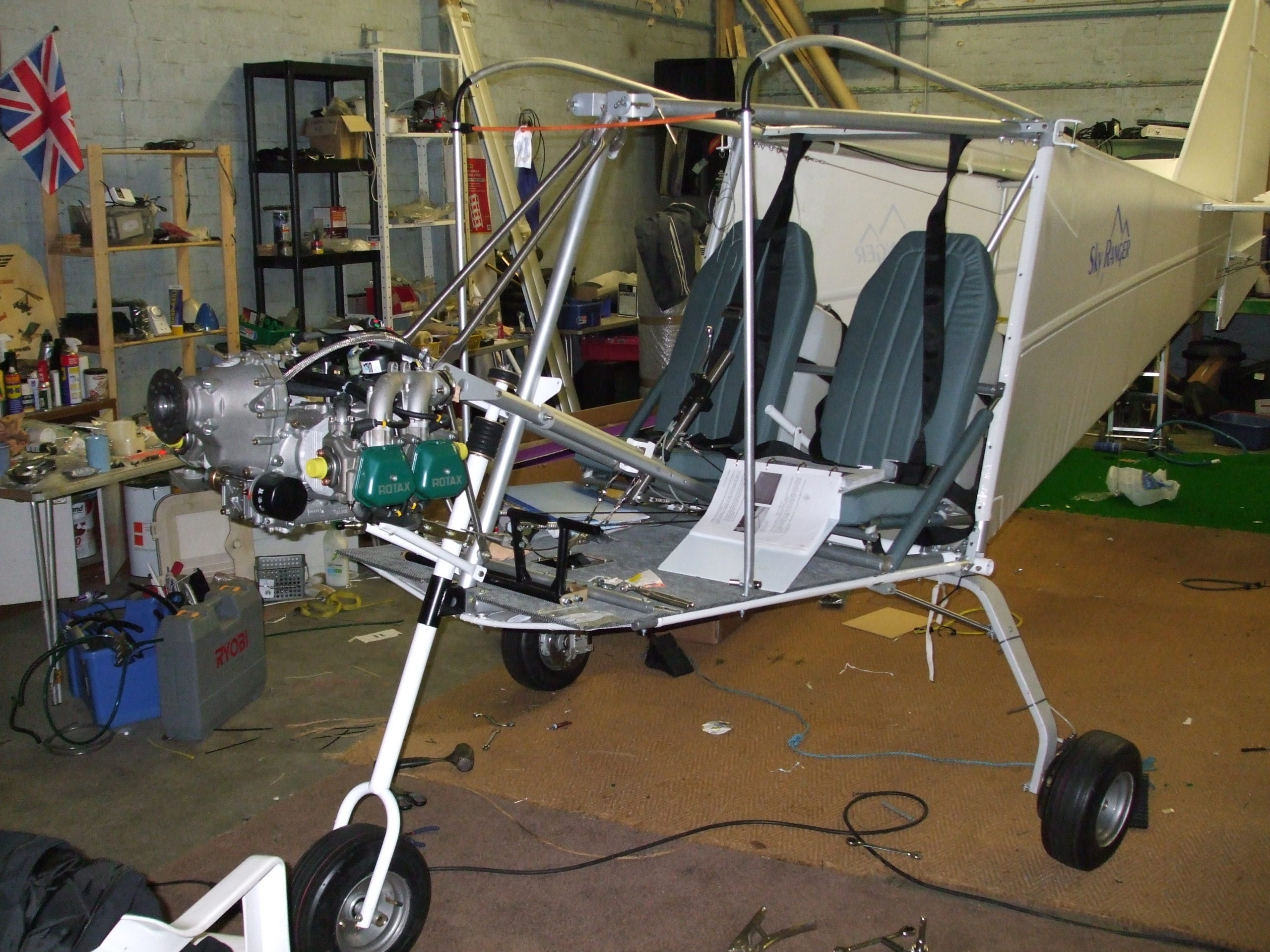
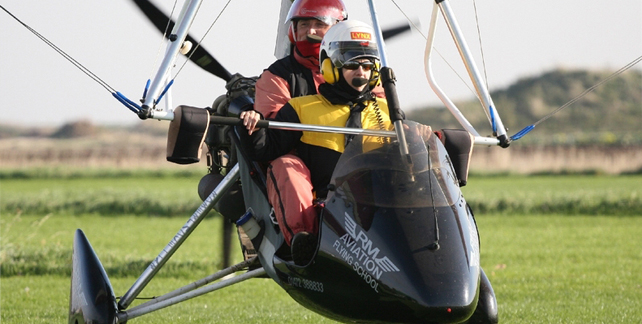
These aircraft look much more like conventional aeroplanes with fixed wings, tailplane and fin. In some cases they have a fully enclosed cockpit. They are controlled in all three axes (roll, pitch and yaw) by the use of ailerons, elevator and rudder.

top

In Conclusion...
Three axis microlights are able to operate in windier conditions but they are structurally more complicated and are, generally, not as portable as weightshift aircraft. At first view microlights may look fragile compared with conventional light aircraft, but appearances are deceptive. The combination of careful design and construction using modern light materials enables them to withstand stresses far greater than many sport aircraft.

SAFE FLYING IS NO ACCIDENT

How do I get started? What's on offer at Rob Mckellar Aviation?
Microlight Training 4 stroke Flexwing & 3-Axis! On Pegasus Quantum 912 and Thruster Jabiru Sprint T600n microlights.
Intensive Training Courses available one week, two week, three week courses.
Trial Lessons!
Aircraft Inspections!
Annual Permits!
Certificates of Experience/General FlyingTests!
Microlight Sales!
Microlight Lease/Shares available in school Aircraft


One of the best ways to check out any sport, is to have a go! You can choose from a 30 minute flight for £55 or a full hands on trial lesson of 1 hour for £95 where you can have a go at the controls and see if piloting is for you. To gain a British Private Pilots Licence (Microlight) you are required to complete a flying training syllabus.You must complete a minimum of 25 hours instructional flying of which 10 must be with you in solo command of the aircraft. Again within this minimum 25 hours you are required to have satisfactorily navigated yourself by air to an airfield at least 15 miles from the start air-field on two different occasions and to 2 differing airfields! There are 5 multi choice exams on Air Law, Navigation and other flying stuff which you have to pass. The pass mark for these exams is 70%. Depending on your commitment and ability you should be flying solo around 15 hours. The cost of obtaining the licence is likely to be somewhere between £2500 and £3500. If you find yourself in the area then just pop in to the airfield for a chat and ask for Rob, you'll be made most welcome. The flying training course can be completed at your own pace from 1 hour per month to a full intensive course with cheap accommodation available locally and any amount of training hours that suit you. Also don't be put off by British winter, some of the best flying conditions occur during this season.

top

Shares now available in Pegasus 912 Quantum and Thruster T600 Sprint.

Are there any Restrictions?
There are no age or disability restrictions to flying as a passenger other than you must fit the safety equipment correctly. Student pilots must be reasonably fit and in good health. In order to handle the aircraft safely they must be within the ages of, minimum, 14 years of age; 1.57m - 1.93m (5ft 2ins - 6ft 4ins) tall.

Making your Dream a Reality! WHAT DO I NEED?
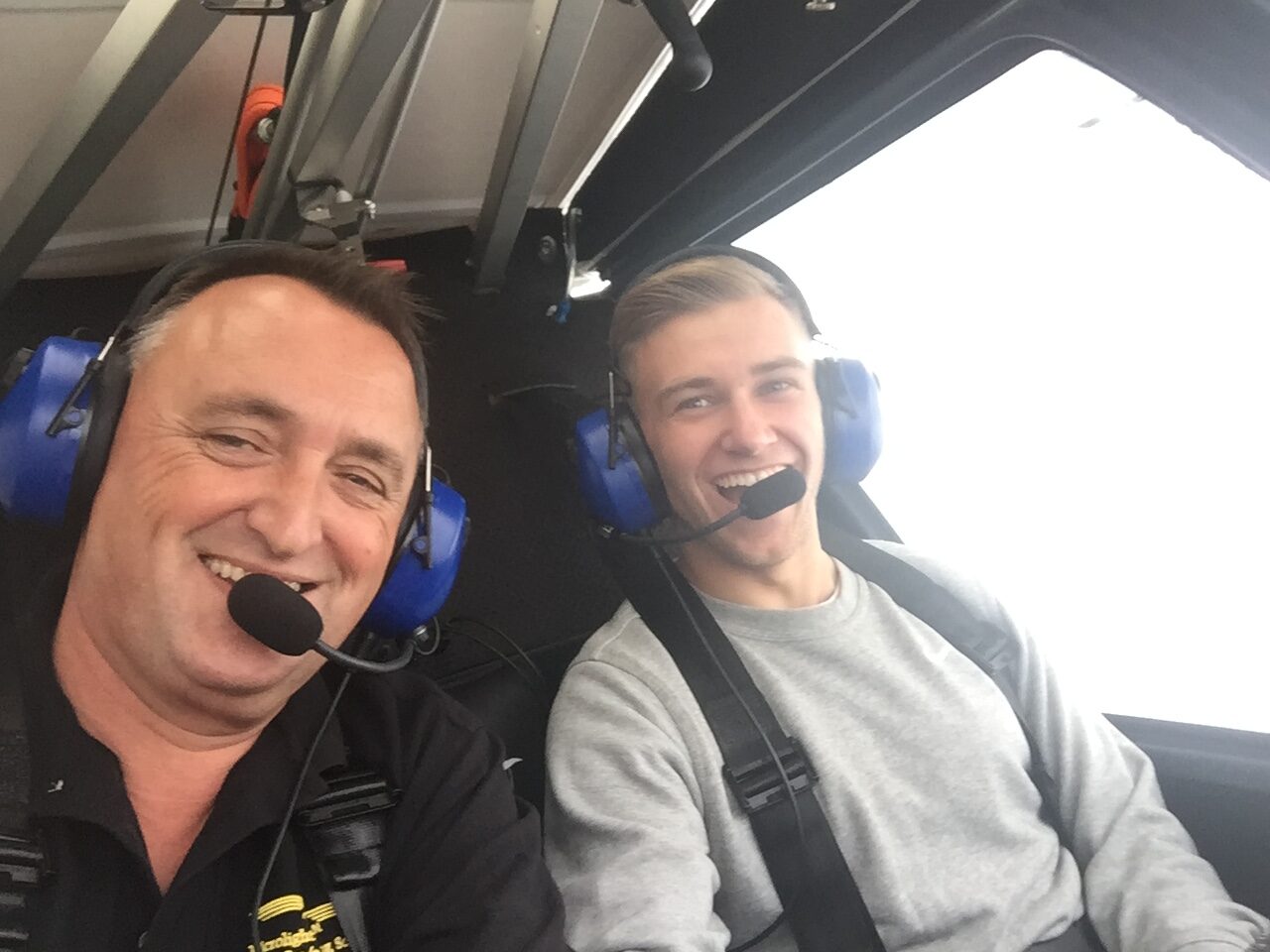
Initially, nothing, RM Aviation will supply all the equipment you require including headset intercom, Helmets, Flying Suits etc. You will be given specially prepared training handouts to aid the learning process for Circuits and checks etc.

What will it all cost?
Both 3-Axis and Flexwing Training is charged at the same rate of £90* per hour for Dual and solo in RMA's Aircraft.

Block Bookings -

10 hours £900 (£90 /hr) 25 hours £2125 £85/hr) paid in advance - SCHOOL AICRAFT
10 hours £550 Dual (£55 /hr) 25 hours £1375 (£55/hr) paid in advance - OWN AIRCRAFT

- 10 hrs Flex to Fixed (or vice-versa) conversion - £900

£60* per hour dual own aircraft and £30* solo. (A school flying hour is charge from Engine Start to Engine Stop).

Advanced Flying Courses generally based around 5 hours flying. To include advanced take-off/landing techniques. Navigation refresher courses.

One day, (approx 4 to 5 hour), expedition flying @ £60 per flying hour. Suits licensed pilots or low hours pilots who would like the experience of visiting two to four airfields in one day plus navigation practice in between, with the comfort factor of an instructor on board.

Ground school courses plus free exams are also available when bought as a package. Please ask for details.

Ground school per hour = £30 per hour
Exams = £30 per exam.

* All prices only correct at time of going to press and include VAT.

top

Last Updated ( Tuesday, 08 July 2008 )